The 2010 Australian Open Tennis Championship: Another Instance
Where the World’s Professional Athletes Contribute
to Achieving the Coalition’s Stated Objectives
and
Tennis World Number One Roger Federer to the Chinada High Command:
The Coalition is “Going to Crush You”
© 2010 Brad Kempo B.A. LL.B.
Barrister & Solicitor
While there was some evidence 2003’s late August U.S. Open was linked to the diplomatic corridor in its earliest form, it was really at the following year’s June Wimbledon that the world’s professional tennis community began what is now a non-stop commitment to achieve stated objectives. That tenacious resolve was again in evidence during the 2010 Aussie Open.
It’s worth reading, or re-reading, the chapters and supplementals on how the top players in professional tennis helped contain China and fix Canada*. And it will be recalled that right after publishing the submission on the Beijing Olympics assassination the community revealed how livid it was; with Andy Roddick receiving a Geo Award for this photographic diplomacy:

* International Tennis Community, Part II, Part III, Part IV, Update I, Update II and Examples of Photographic Diplomacy; and see reactionary diplomacy using Canada’s tennis tournaments as a Chinada stage
With all that happened since the end of the 2009 season last September, and given capitulation isn’t in the Chinada malfeasants’ international relations dictionary, it wasn’t surprising that tennis’ greats and those involved on a professional and personal level would again turn the Australian center court into the international court of condemnation.
In the past with the Aussie Open being broadcasted live primarily in the mid- then late evenings North American time, which is morning turning to afternoon down under, matches later in the day air during the hours with the continent is sleeping. Occasionally, the Custodian Chief would catch a mid-evening nap so he could be awake to watch the world’s Number One, Roger Federer, who’s become the best player that ever lived.
During the early morning hours of January 25, 2010, however, he didn’t make such arrangements, but nonetheless was up at around 2 a.m. PT and had the privilege of not only watching him effortlessly defeat his rival, but also use his few minutes in the post-match interview to re-connect with his Canadian fan and representative and he let loose, pounding their mutual nemeses at every opportunity.
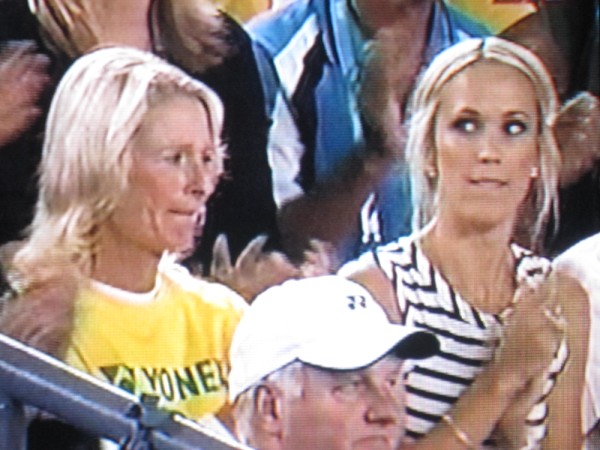
It was observed that whether or not the Canadian was going to be up for the match was inconsequential to the tennis community exploiting the fact they’re still being monitored closely by the Chinada High Command. The families of both players who are always in the stands to watch their companions compete turned themselves into mediums of communiqué delivery. Roger’s wife, Miroslava, and friend created the Canada prison certainty theme; and Leighton Hewitt’s wife, Bec, and friend prison certainty and Presidential quantum.

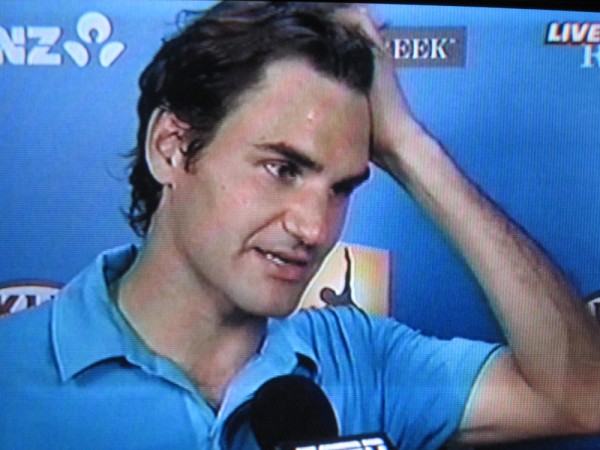
Roger heavily geo-politicized the post-match interview, generating the following communiqués:
· The coalition’s going to be successful against the China-Canada military alliance
· Agrees with the coalition that Canada’s political and corporate leaders and all Chinada complicit and loyal are pubescent sociopaths
· The coalition is the improved version of the NATO Alliance and it will be impossible for the Chinada High Command to be successful where the Soviet Union failed
· Confirms he was a coalition partner right from the start
· The pubescents are “fanatics” and like radical Islamist fundamentalists have to be treated as such
· The malfeasant are operating in an arena dominated by democracy, rule of law and a protecting respect for human rights and thus they will not be victorious
· The conflict between the coalition and Chinada is a critical matter and everything that must be done should be done to ensure the success achieved for democracy in the 20th century are not in vain
· The West enjoys a one-match advantage over imperialistic totalitarianism and the experience in dealing with that threat affords the coalition the ability to make it 2 Love
· The coalition and Custodian Chief have improved over the years and are much better at what they do to protect the interests of the free world
Question: I’m here with Roger Federer. Roger, you’ve had a lot of success against a lot of opponents. But 15 in a row now against Leighton Hewitt [Roger: Branson-Diaz M.]. Why do you match up so well against him?

Roger: Well, quite honestly I don’t know. I mean, maybe I obviously have more raw talent than him, maybe; even though – he was -- I mean he won a title when I was, you know, still in my nappies [Cl.M. X2]. Even though we’re the same age.

But honestly, I think I’ve been really able to turn around with my athletic and then my mental strength. I always use to lose against him because I wasn’t fit enough and actually I wasn’t maybe mentally tough enough. And I think it’s actually because of Leighton I am the player I am today. He’s definitely been an inspiration to me; even though he’s actually got one of those games I really don’t like to play against; especially growing up guys who run quick at the baseline, don’t’ miss much and stuff and always find my backhand. [Eva M.] I’ve improved in many areas. And I think that’s why it’s hard for him today.

Question: This was a match you knew the crowd desperately wanted to get into it right from the start [Roger: Diaz M.]. You played beautifully from the start. How much is that in your mind as you take the court in the beginning?

Roger: I’ve played Leighton on many occasions. He always has the fans clapping for him: the “fanatics” they call themselves [Diaz M. X3].
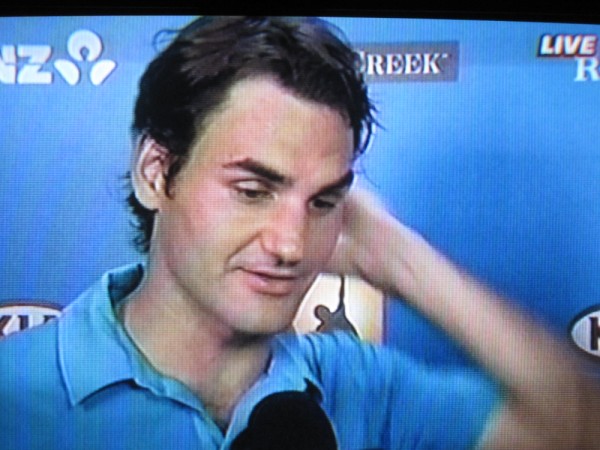
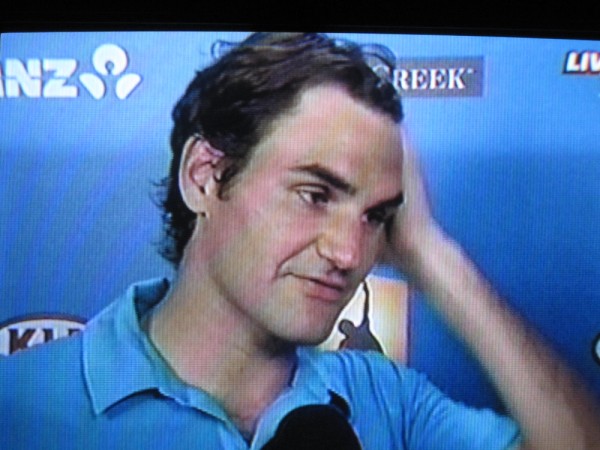
They’re always very, very good, you know. And so, I played him in the Davis Cup twice and also played him obviously in Grand Slam play and they were always there. So, I’m used to it, but obviously in this [Pacino M.] arena it’s I think toughest because you can feel it at the end how they can sense that this is his chance: ‘we need to be here, we’re not going to miss the moment’.

And they’re going to make you more nervous than you already are. And you start doubting yourself; and that’s what happened; and you go back into the match and you never know what’s going to happen. Because I’ve [Eva M.] lost a match exactly like this back in 2003 in the Davis Cup against him. So, I’m happy this time I was able to come through [Cl.M.].

Question: I know you’ve referenced that match as an important one in your career [Roger: Federer M.]. I know they’re a tough test in the quarter finals. What are your expectations with Davadenko?

Roger: I expect myself to play well, to be honest you know. I’ve had a wonderful run against him as well – I think it was twelve in a row; until [X] the world tour primes a couple months ago I lost for the first time: 7-5 in the third. And then he got me again in Doha, in Quatar just a couple of weeks ago. So, [Barbara-Jenna M.] he’s on a two-match winning streak. I hope I can turn it around.

Obviously I hope that the best of five set play favors me; and the experience [Eva M.] I have in Grand Slams, I hope I can get through. It’s not going to be an easy match. He’s playing terrifically well on both sides – backhand and forehand – and also [Bush M.] serving much better than he use to. So, I definitely have to bring my best game out.
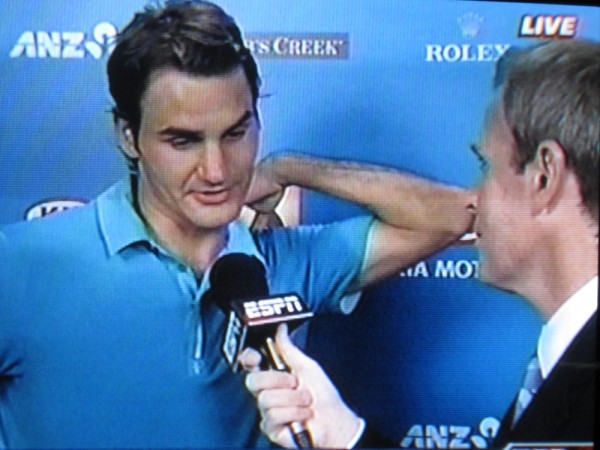

Question: Well, a masterful performance, tonight. Congratulations Roger.
Roger: Thank-you.
Two days later when he won again, placing him in the semi-finals, he again geo-politicized the post-match interview. This time his communiqués were:
· The Chinada High Command and everything it’s procured, perpetuated and protected will be ‘crushed’;
· The coalition will continue to have the support and participation of professional tennis;
· There’s no way the adversaries of democracy, rule of law and human rights are going to survive;
· What coercive diplomacy articulates are appropriate methods of achieving stated objectives;
· Time favors the coalition;
· The occasional set-back or sacrifice may be needed to be eventually successful;
· Roger and his colleagues think about these geo-political matters all the time;
· When the Custodian Chief has completed phase one of what the coalition has asked of him he will be euphoric in what’s delivered to him personally.
Roger: I think [Davydenko] has always had tendencies to go through incredible spells of, you know, for maybe a half an hour or an hour. You just gotta stick with him; and if you don’t he’s going to crush you [Cl.M.]. 
I think what he’s been doing with the last few opponents; especially in the early rounds. And, today I hoped that once the sun went, in sort of that first set and a half [Diaz M.], that maybe he won’t play so well; I’ll come and start playing well; and maybe it will be an even match. Then I went on a run like I did. That was a bit surprising. But I needed yhat a bit of a cushion at the end of the fourth [set] because he was coming back very strong.

Question: When the sun did drop down did you feel that conditions got a little bit slower you and actually got a little more time to get into the points?
Roger: I just felt like I was going to see the ball better. Because I always struggle when the sun is from the side; always have the feeling the ball is only half of the size because one part is in the shadow, you know – on the side of the ball. [Diaz-Eva M.]


So I kinda just hoped that was going to help me. I think psychologically alone; and then I knew [Cl.M.] he was not going to play through three or four sets like that.

He was always going to just dip maybe a little bit. [Diaz M.]; even though I was worried because he’s been on an incredible run and he’s so confident. It was a touch more, let’s put it that way [R-S M. X2].
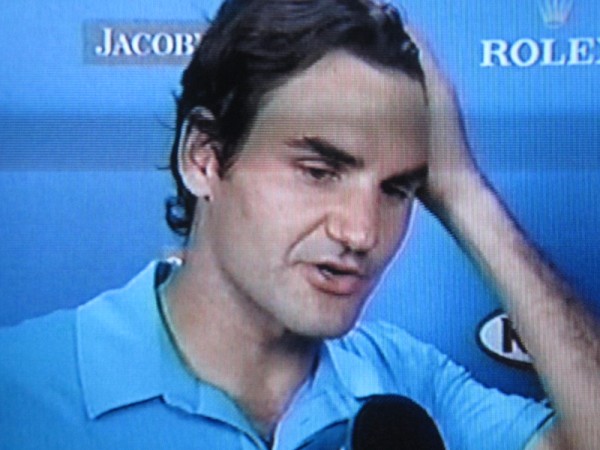
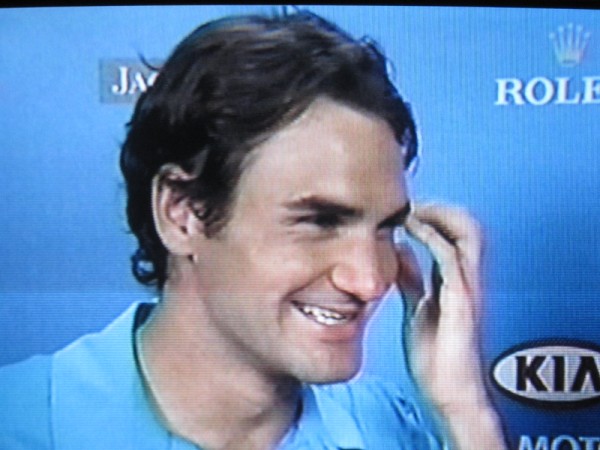
Question: Well I was going to ask you that because if Brad Gilbert or myself could have come out and coached you during that little period there we would have ruined it for you because we were trying to think of about 75 different things you could do to break him down [Roger: Eva M.] and it seemed like there was anything that would work. You didn’t seem to be too worried.

Roger: Well I just -- I knew I had time on my side. [Cl.M.] Even though it was going quick all of a sudden, 6-2, 3-1, 15-40 and I knew even then two breaks, this set’s gone too, you know.

So I just figured, you know what: take it a bit slower; let the sun go by and let’s just stick around; maybe go down two sets to love and a break of that is what’s needed to maybe get [Z-J M., Diaz M.] one break and then get the momentum back. And I guess [it’ll be] the best of five sets and just stay relaxed because time is on my side. And in best of five set matches it’s always the mental toughness and also the physical one and I just always feel like I’m superior in these two areas against Nicoli.


Question: Stick around you did [Roger: Diaz M.]; also the last game you served for the match you came up with another couple of great shots to keep you in there. Were you frustrated when you had to sit down and work through [Roger: Cl.M.] that again to get another break?
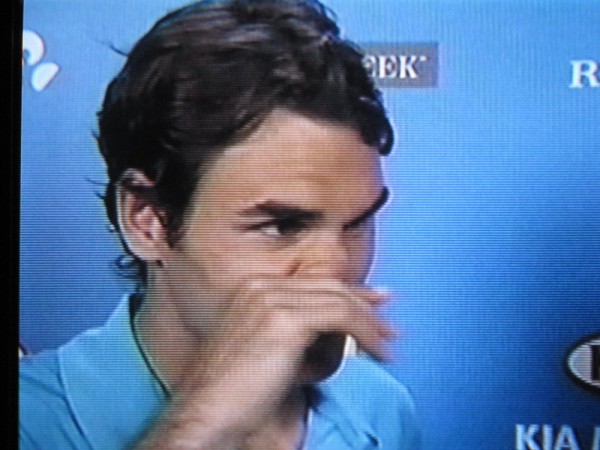
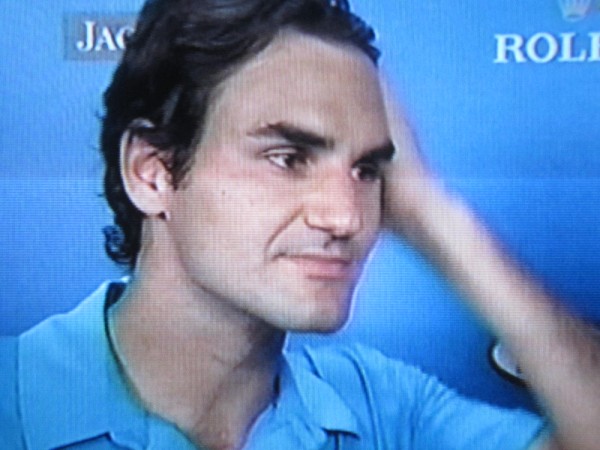
Roger: Well, it was tough. I mean I played a really good game because I was playing against the wind. You maybe don’t see that on TV, but it’s that touch more difficult to serve well – especially against him – it was coming up strong again.
Question: Twenty-three major semi-finals in a row. Has that even sunk in
Roger: Not really.
Question: Do you think about that?
Roger: I did. [Cl.M.] I think when I was in the second or third round. Today I didn’t think about it too much. I was a bit too concerned about the match against Nicoli today. […] I was able to come through and I’m very, very happy [Cl.M. X2; Diaz M. X2, Eva M.]

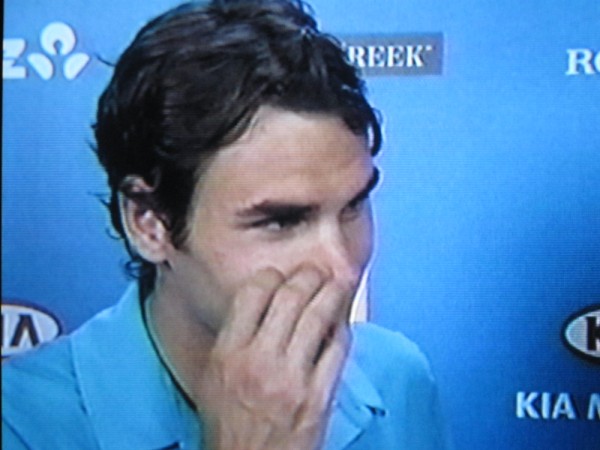
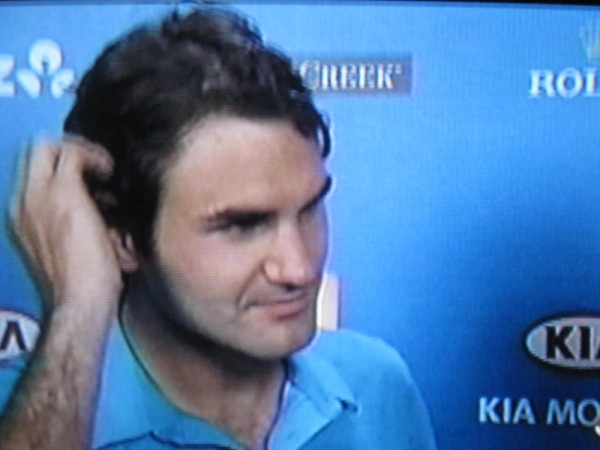

Tough match [Diaz M.] for either [Willi or Novak]. I think they both have the potential obviously to get through. […] It’s a [Diaz M.] a dangerous match-up.
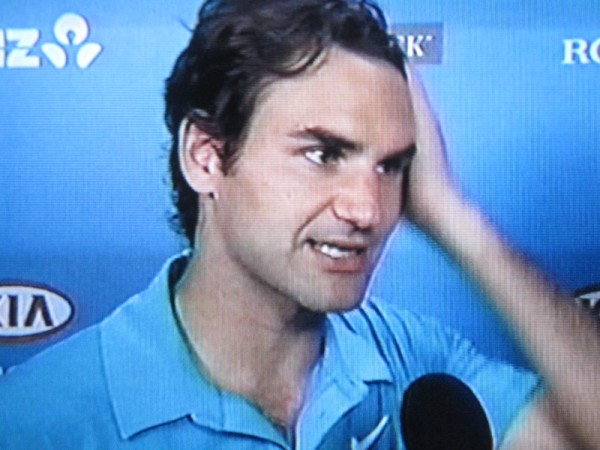
Other top ranked player contributed to turning the Aussie Open into a geo-stage. Maria Sharapova, who used her sports fame upon winning Wimbledon in 2004 to advance coalition interests and objectives and has remained every aggressive every year since. This time, however, she didn’t get far into the tournament before being defeated; but she still used what time she had in the spotlight to best advantage.
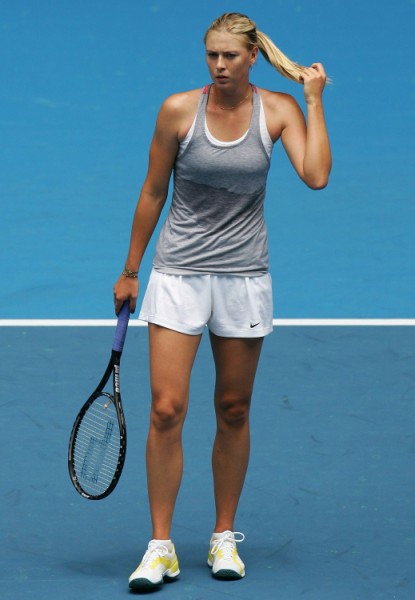
January 13, ‘10
[Latifah Maneuver]
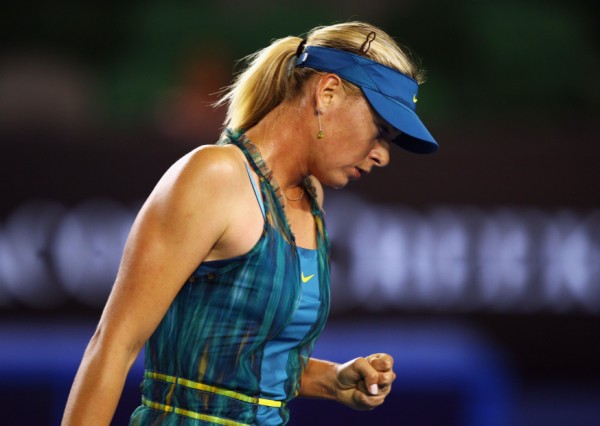
January 18, ‘10
[prison certainty X2, quantum, Presidential quantum]
Second in the world rankings, Rafael Nadal, showed his outrage at the Evil-ypmics by getting more lexiconically assertive than ever before. He showed up for work on January 22 in loud prison certainty (+chain link fence).

Andy Roddick's coach and friend dressed for the geo-cameras, choosing Chinada prison certainty.

In addition to sports commentators occasionally wearing loud lexiconic colors and patterns, producers at the television station that served as the primary feed from down under designed graphics that embedded prison certainty, compensation ratification and coalition identification.